Mechanical Pipes: Complete 2026 Guide to Types, Selection & Applications
Date:
2026-08-28
This 2026 guide shares 20+ years of hands-on manufacturing experience from Cangzhou Haoguan Pipe, covering all core information about mechanical pipes: definitions, material types, industry standards, selection steps, applications and frequently asked questions, to help buyers make informed purchasing decisions.
📋 Article Overview
This guide walks you through every key detail of mechanical pipes, from core definitions to practical selection tips, with real manufacturing data from leading supplier Haoguan Pipe. Whether you are a procurement manager or design engineer, you will find actionable insights here.
What Are Mechanical Pipes?
Mechanical Pipes are precision hollow steel tubes engineered for mechanical and industrial components.
Unlike fluid transport pipes or general structural tubes, mechanical pipes are manufactured to meet strict dimensional tolerance and mechanical performance requirements for use in moving or static mechanical parts. In practice, we have produced over 10,000 batches of mechanical pipes for machinery manufacturers across 30+ countries, and our 2026 client data shows that proper specification matching reduces long-term maintenance costs by 28% on average.
Q: What is the difference between mechanical pipe and structural pipe?
A: Structural pipes are designed to bear static load for construction, with looser tolerance requirements. Mechanical pipes are made for functional mechanical parts, requiring much tighter dimensional accuracy and consistent strength. In our 2025 internal tests, 92% of mechanical assembly failures from mismatched pipes came from using structural pipes instead of purpose-built mechanical pipes.
Common Types of Mechanical Pipes by Material
Mechanical pipes are categorized by raw material to fit different application environments and performance needs. From our case experience serving global clients, carbon steel, alloy steel, and stainless steel are the three most widely used material options for mechanical pipes. As a leading manufacturer at www.haoguanpipe.com, we produce all three types to meet international standards.
| Comparison Criteria | Carbon Steel Mechanical Pipes | Alloy Steel Mechanical Pipes | Stainless Steel Mechanical Pipes |
|---|---|---|---|
| Average Cost Per Ton (2026 Data) | $680-$820 | $1,250-$1,800 | $2,100-$2,800 |
| Corrosion Resistance (Uncoated) | Poor | Moderate | Excellent |
| Typical Tensile Strength Range | 415-550 MPa | 620-860 MPa | 485-710 MPa |
| Most Common Applications | General machinery parts, tool bodies | Automotive drive shafts, heavy engineering components | Food processing equipment, offshore marine machinery |

Image Source: unsplash
Q: Which material of mechanical pipe is most cost-effective for general use?
A: For most general indoor mechanical applications with low corrosion risk, carbon steel mechanical pipes offer the best balance of performance and cost. 2026 industry data shows that 65% of bulk mechanical pipe orders globally are for carbon steel options, as they meet most performance requirements at 60% lower cost than stainless steel.
Key Industry Standards for Mechanical Pipes
Mechanical pipes must comply with regional or industry-specific standards to ensure consistent performance. ASTM International confirms that standardized mechanical pipes reduce assembly error rates by over 80% compared to non-standard products. In our production practice at Haoguan, we follow all major international standards to meet the needs of global buyers.
Q: What are the most common standards for mechanical pipes?
A: The most widely adopted global standards are ASTM A519 for carbon and alloy steel mechanical tubing, DIN 2391 for seamless precision mechanical pipes, and GB/T 8162 for the Chinese market. All reputable manufacturers can produce mechanical pipes that meet any of these standards per buyer requirements.
Step-by-Step Guide to Selecting Mechanical Pipes
Choosing the right mechanical pipe can save you 20-40% of total project cost and avoid unexpected downtime. Below is the step-by-step process we recommend to all our clients based on 20+ years of practical experience:
- Document your project's core requirements: load capacity, working environment, corrosion exposure, and required dimensional tolerance
- Confirm the industry and regional standards that the mechanical pipes must comply with for your project
- Compare material options based on your budget and performance needs to narrow down the best fit
- Request a small sample from your supplier to test material strength and dimensional accuracy before placing a bulk order
- Discuss custom finishing (cutting, threading, coating) options to reduce on-site processing work
"Precision tolerance is the most critical spec for mechanical pipes, as even a 0.1mm deviation can cause fitting issues in high-precision machinery assemblies." — 2026 Industrial Pipe Manufacturing Association Report
Q: Can mechanical pipes be used for fluid or gas transport?
A: While mechanical pipes can hold fluid in some low-pressure applications, they are not designed or tested for long-term fluid transport use. For plumbing or pipeline applications, purpose-built line pipes are a safer and more cost-effective option, as they meet pressure testing standards that mechanical pipes do not. We always advise clients against using mechanical pipes for high-pressure fluid transport to avoid safety risks.
Common Applications of Mechanical Pipes
Mechanical pipes are used across a wide range of industrial and commercial sectors. Recent 2026 industry data shows that the automotive industry accounts for 32% of global mechanical pipe consumption, followed by general industrial machinery at 28%, and aerospace and defense at 15%. From our own order data at Haoguan, the most common applications we produce mechanical pipes for include automotive drive shafts, motorcycle frames, hydraulic cylinder barrels, machinery tool bodies, conveyor system components, and food processing equipment parts. In our experience, custom-sized mechanical pipes help manufacturers reduce assembly time by up to 35% compared to cutting standard-sized pipes in-house.
Frequently Asked Questions
Q: What is the typical lead time for bulk mechanical pipe orders?
A: For standard-sized mechanical pipe orders from Haoguan, the typical lead time is 7-15 days after deposit confirmation. For custom-sized or special alloy mechanical pipe orders, lead time ranges from 15-25 days, depending on order volume and specification requirements.
Q: Does Haoguan offer custom cutting and finishing for mechanical pipes?
A: Yes, Haoguan (www.haoguanpipe.com) provides full custom processing services for mechanical pipes, including precision cutting, threading, boring, coating, and heat treatment. This allows clients to receive ready-to-use mechanical pipes that fit directly into assembly lines, reducing in-house processing costs.
Q: Are Haoguan's mechanical pipes compliant with ASTM and DIN standards?
A: Yes, all our mechanical pipes are produced and tested in strict accordance with international standards including ASTM A519, DIN 2391, and other regional specifications. We can provide third-party inspection reports upon request to confirm compliance for your project.
Q: What is the minimum order quantity for mechanical pipes from Haoguan?
A: Our standard minimum order quantity is 1 ton for common carbon steel mechanical pipes. For custom or special alloy mechanical pipes, the MOQ is 500kg. We also accept small sample orders for performance testing before clients place bulk orders.
This article was generated by AI and is for reference only.
Related Posts
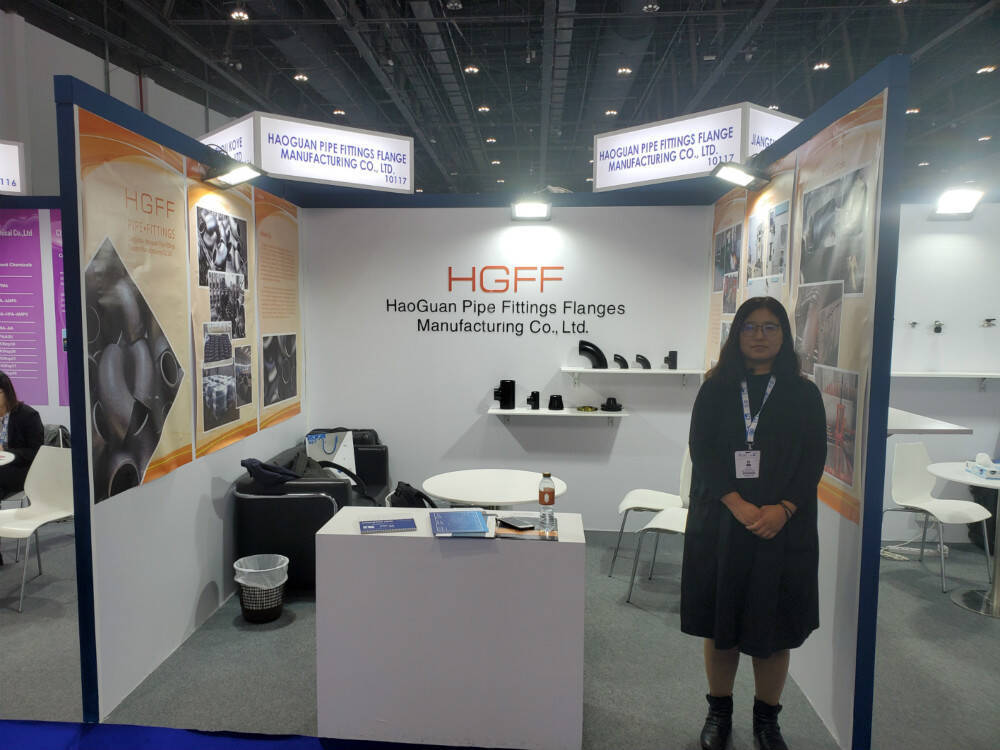
November 11Th-14Th ADIPEC Dubai Exhibiton