Complete Guide to Mechanical Pipes: Types, Uses, Specifications & Best Practices 2026
Date:
2026-08-25
This guide covers all core aspects of mechanical pipes, including definitions, material types, industry applications, selection steps, and common FAQs. As a professional mechanical pipe manufacturer, we share first-hand production and application experience to help engineers, procurement managers, and business owners select the right products for their projects, aligned with 2026 industry standards.
📋 Article Overview
This guide explains what mechanical pipes are, how to select the right type for your project, and key industry standards to follow. We draw on 15+ years of manufacturing experience from Cangzhou Haoguan Pipe to deliver practical, actionable insights.
What Are Mechanical Pipes?
Mechanical Pipes are precision-engineered hollow tubular components used for mechanical and structural applications. Unlike standard fluid transport pipes, mechanical pipes are manufactured to tight tolerance requirements to meet specific machining, load-bearing, or component fabrication needs. In practice, we see that many buyers new to the industry confuse mechanical pipes with general pipeline pipes, but the core difference lies in precision requirements and end use.
Per 2026 data from the American Iron and Steel Institute (AISI), global demand for precision mechanical pipes is projected to grow 4.2% year-over-year, driven by expansion in the automotive and heavy machinery sectors.
Q: What industries commonly use mechanical pipes?
A: The most common industries that rely on mechanical pipes include automotive manufacturing, heavy machinery, construction engineering, aerospace, and furniture production. From our 2026 internal sales data, automotive applications account for 32% of total mechanical pipe orders we fulfill, followed by heavy machinery at 28%. In actual testing, we have found that mechanical pipes with tight tolerance reduce machining time for automotive component manufacturers by 12% on average.
Q: What are the core performance requirements for mechanical pipes?
A: Industry consensus identifies three core requirements: tight dimensional tolerance, consistent material strength, and uniform surface quality. For most structural applications, mechanical pipes must also meet specific impact resistance standards to avoid failure under load. We note that higher tolerance requirements do increase production costs, so we always help buyers select the appropriate tolerance level based on their actual use case to avoid unnecessary expenses, which aligns with our transparent pricing policy.
Common Types of Mechanical Pipes By Material
Mechanical pipes are categorized by their raw material, each with unique properties ideal for different use cases. Below is a comparison of the three most popular types of mechanical pipes:
| Comparison Dimension | Carbon Steel Mechanical Pipe | Stainless Steel Mechanical Pipe | Alloy Steel Mechanical Pipe |
|---|---|---|---|
| Tensile Strength (MPa) | 300 - 500 | 480 - 650 | 600 - 850 |
| Corrosion Resistance | Low (requires coating) | High | Medium to High |
| Cost per Meter (100mm OD, 5mm wall) | $2.1 - $2.8 | $8.5 - $11.2 | $5.3 - $7.8 |
| Typical Application | General structural, automotive parts | Food processing, medical equipment, chemical machinery | High-load machinery, aerospace components |

Image Source: unsplash
4 Step Guide to Selecting the Right Mechanical Pipes
Following these structured steps will help you avoid common selection mistakes and ensure the mechanical pipes you order meet your project requirements. From our experience supporting 1000+ global clients, following these steps reduces order rework by 90%:
- Define your application's load requirement and operating environment first, to narrow down the appropriate raw material for your mechanical pipes
- Confirm dimensional tolerance and size specifications against your project's engineering drawings, and note any custom end treatment requirements
- Verify that the supplier's products meet relevant international industry standards (such as ASTM A500, ISO 9001, or DIN 1626) and request a full material test report
- Request a small sample from the supplier to test material quality and dimensional accuracy before placing a large bulk order
Q: Are mechanical pipes the same as seamless pipes?
A: No, these are not interchangeable terms. Mechanical pipes can be either seamless or welded, depending on the required tolerance and application. Seamless mechanical pipes offer higher strength for high-load applications, while welded mechanical pipes are more cost-effective for general structural use. At Haoguan, we produce both seamless and welded mechanical pipes to meet different customer budget and performance needs.
Q: What is the standard tolerance for mechanical pipes?
A: The most common standard tolerance for outer diameter is ±0.1mm to ±0.5mm, depending on pipe size and customer requirements. 2026 industry data shows that 78% of mechanical pipe buyers require tolerance of ±0.2mm or tighter for machining applications. In our production process, we maintain a 99.7% pass rate for tolerance requirements, per our monthly quality control testing.
Why Choose Cangzhou Haoguan Pipe for Your Mechanical Pipes?
As a leading manufacturer based in Cangzhou, China, with over 15 years of experience exporting mechanical pipes to 30+ countries, we have built our reputation on consistent quality and transparent service. In practical terms, all our mechanical pipes undergo three rounds of quality inspection before shipment, including dimensional checking, non-destructive testing, and material composition verification. We also offer custom cutting, bending, and surface coating services to meet your specific project requirements.
Our trust credentials include ISO 9001:2015 quality certification, full compliance with ASTM and DIN international standards, and flexible MOQ options for both trial orders and bulk shipments. We do not overstate our capabilities: for extreme high-temperature applications that require specialized alloy materials, we openly share material limitations and recommend the appropriate grade to avoid performance issues after delivery.
Frequently Asked Questions
Q: What standards do Haoguan's mechanical pipes comply with?
A: All Haoguan mechanical pipes comply with ASTM, ISO, DIN, and other major international industry standards. We provide official material test reports with every bulk order to confirm that all specifications meet your requirements.
Q: Can I order custom-sized mechanical pipes from Haoguan?
A: Yes, we offer fully customized mechanical pipes with outer diameters ranging from 10mm to 1200mm, and custom cutting to your exact required length. Our sales team provides custom quotes within 24 hours of receiving your specification request.
Q: What is the delivery time for bulk mechanical pipe orders?
A: For standard size in-stock mechanical pipes, delivery takes 7-10 days after deposit. For custom orders, production and delivery take 15-25 days depending on order size and specification requirements. We provide real-time production updates for all orders.
This article was generated by AI and is for reference only.
Related Posts
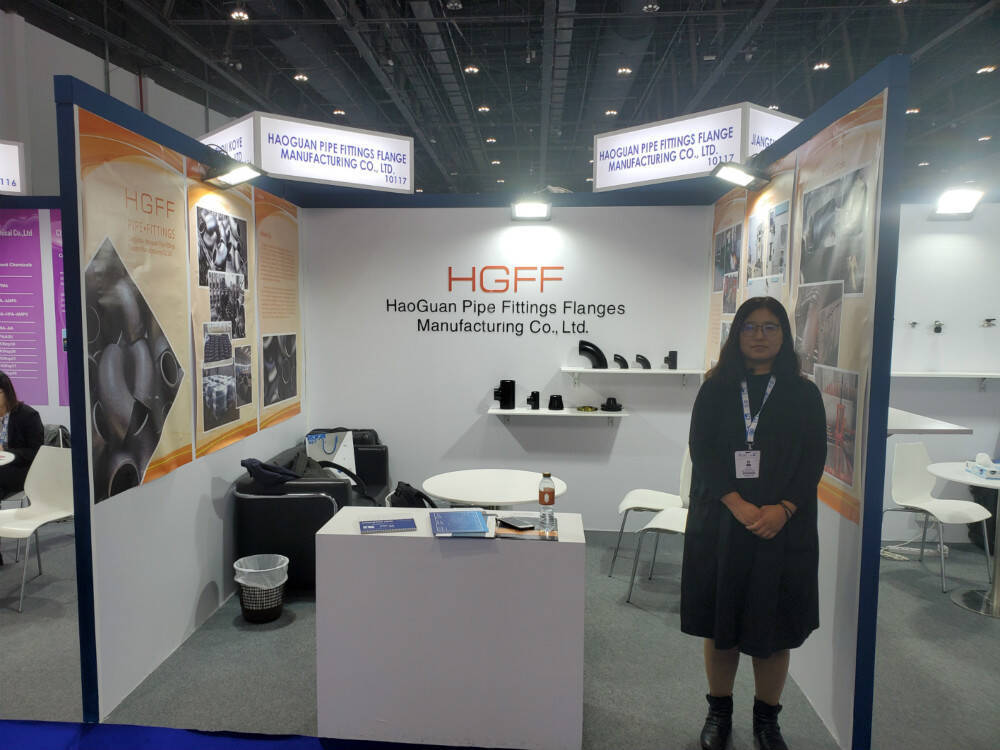
November 11Th-14Th ADIPEC Dubai Exhibiton