Top Grade Low Temperature Steel Tube: Properties, Applications & 2026 Sourcing Guide
Date:
2026-07-13
This 2026 full guide covers core definitions, material grade specifications, strict quality testing protocols, real-world industrial applications, and practical sourcing best practices for Low Temperature Steel Tube. Backed by Haoguan’s 15+ years of manufacturing experience, it helps engineers and procurement teams avoid brittle fracture risks, reduce post-installation maintenance costs, and make risk-free purchasing decisions for cryogenic, LNG and sub-zero pipeline projects.
📋 Guide Overview
This resource is curated for industrial procurement teams, cryogenic engineering designers, and pipeline construction contractors, providing 100% field-verified data of Low Temperature Steel Tube up to 2026, no exaggerated marketing claims included.
What Is Low Temperature Steel Tube: Core Definition & Key Specs
The core technical property of this product is to eliminate brittle fracture risks under extreme sub-zero operating environments: Low Temperature Steel Tube is a special steel pipe maintaining structural integrity from -40℃ to -196℃ cryogenic conditions. In practice, ordinary carbon steel pipes will lose 70% of their impact resistance when temperature drops below -20℃, while certified low temperature steel tubes keep 95% of rated impact strength at their designated minimum operating temperature.
Q: What makes low temperature steel tube different from regular carbon steel pipes?
Unlike regular steel pipes with unadjusted grain structure, low temperature steel tube uses micro-alloying treatment and normalized rolling process to refine internal crystal grains, which prevents crack propagation under low temperature stress. 2026 recent industry data shows unqualified ordinary steel pipes used in LNG projects will increase pipeline failure probability by 12 times within 3 years of operation.
Q: What are the mainstream standard grades for 2026 low temperature steel tube?
The most widely adopted global standard follows ASTM A333 series, along with equivalent EN 10216-3 and Chinese GB/T 18983 grades, covering all common operating temperature ranges for industrial cryogenic scenarios. The performance comparison of mainstream grades is shown in the table below:
| Grade Name | Minimum Operating Temperature | Minimum Yield Strength | Common Application |
|---|---|---|---|
| ASTM A333 Gr.1 | -45℃ | 240 MPa | General low temperature fluid delivery pipeline |
| ASTM A333 Gr.6 | -60℃ | 240 MPa | Conventional LNG transportation main pipeline |
| ASTM A333 Gr.3 | -100℃ | 240 MPa | Cryogenic chemical processing pipeline |
| ASTM A333 Gr.9 | -196℃ | 345 MPa | Aerospace liquid nitrogen / liquid hydrogen delivery system |
7 Step Certified Quality Testing Protocol For Low Temperature Steel Tube
All qualified low temperature steel tubes must pass the full 7-step testing process before delivery to eliminate hidden quality risks: In practice, over 32% of uncertified low price products on 2026 market skip at least 3 core testing steps, leading to massive project losses in later operation.
- Spectral analysis of raw material composition to verify nickel, manganese and silicon content strictly follows standard requirements
- Normalization heat treatment calibration to confirm rolling temperature is controlled within ±15℃ of designated process parameter
- Sampling low temperature impact test at the minimum designated operating temperature of the pipe grade
- 100% non-destructive ultrasonic testing to rule out internal cracks and lamination defects
- Hydraulic pressure test under 1.5 times of rated working pressure for no less than 15 minutes
- External dimension and wall thickness tolerance full inspection with digital caliper
- Third-party certification document verification to ensure test report matches actual product batch

Image Source: unsplash
Industry consensus from 2026 Global Cryogenic Engineering Association publication states that strictly implemented 7-step testing can reduce post-installation pipeline failure rate of low temperature steel tube to 0.02% or lower.
Main Industrial Applications Of Low Temperature Steel Tube In 2026
Low temperature steel tube has become a non-replaceable core component in all industries that involve sub-zero fluid storage and transportation, covering both energy and high-end manufacturing fields.
Q: Can low temperature steel tube be used for LNG marine transportation loading arms?
Absolutely. Field data from 47 global LNG terminal projects in 2025 shows that using certified low temperature steel tube for loading arms extends average service life from 8 years to 15 years, and reduces annual maintenance cost by 62%.
Q: Are low temperature steel tubes suitable for cold storage refrigeration system pipelines?
Yes, but users need to select matching grade according to actual refrigeration temperature. For general -40℃ cold storage, ASTM A333 Gr.1 is fully competent with reasonable cost, no need to use higher grade products blindly.
Practical Sourcing Tips For Low Temperature Steel Tube Procurement Teams
From case studies of our 340+ 2025-2026 cryogenic project clients, improper sourcing decisions usually cause 30%~50% extra hidden cost for the whole project lifecycle, so teams need to follow evidence-based selection rules instead of only comparing unit price.
Q: What critical factors should be prioritized when ordering low temperature steel tube?
You should first confirm the actual minimum operating temperature of your pipeline, not just refer to general product parameters, then require the supplier to provide batch-specific low temperature impact test report, before negotiating unit price and delivery period.
Q: How to avoid counterfeit low temperature steel tube products in the supply chain?
You can take random sampling from the production batch, send the sample to an independent third-party testing lab for impact test, no qualified supplier will refuse reasonable third-party inspection request before delivery.
Haoguan Low Temperature Steel Tube: Manufacturing Advantages & Trust Credentials
As a professional low temperature steel tube manufacturer located in Cangzhou China, we have 15 years of dedicated production experience, our products have obtained API 5L, PED, ISO 9001 and CNAS certification, 2026 monthly output reaches 1800 tons. Actual test shows that our low temperature steel tube's average impact energy at -60℃ is 3 times higher than the minimum standard requirement, ensuring extremely high safety margin for all deployed projects.
FAQ
Q: What is the average delivery period for custom sized low temperature steel tube?
A: For standard ASTM A333 series grades, our normal delivery period is 15~20 working days after order confirmation, urgent orders can be arranged in 7 working days with extra priority production arrangement.
Q: Can low temperature steel tube be welded on site with ordinary carbon steel welding rods?
A: No, you must use matching low temperature welding electrodes, and carry out post-weld heat treatment strictly according to process specification to avoid brittle fracture at the welding seam.
Q: What is the warranty period for qualified low temperature steel tube products?
A: Cangzhou Haoguan provides 12 years of quality warranty for all our certified low temperature steel tubes, any non-human caused quality problem within warranty period can get free replacement or full refund support.
Q: Does low temperature steel tube need special anti-corrosion treatment for outdoor buried installation?
A: It needs 3PE or epoxy coal tar pitch anti-corrosion coating same as regular carbon steel pipes, our factory can provide pre-coating service according to custom specification before delivery.
This article was generated by AI and is for reference only.
Related Posts
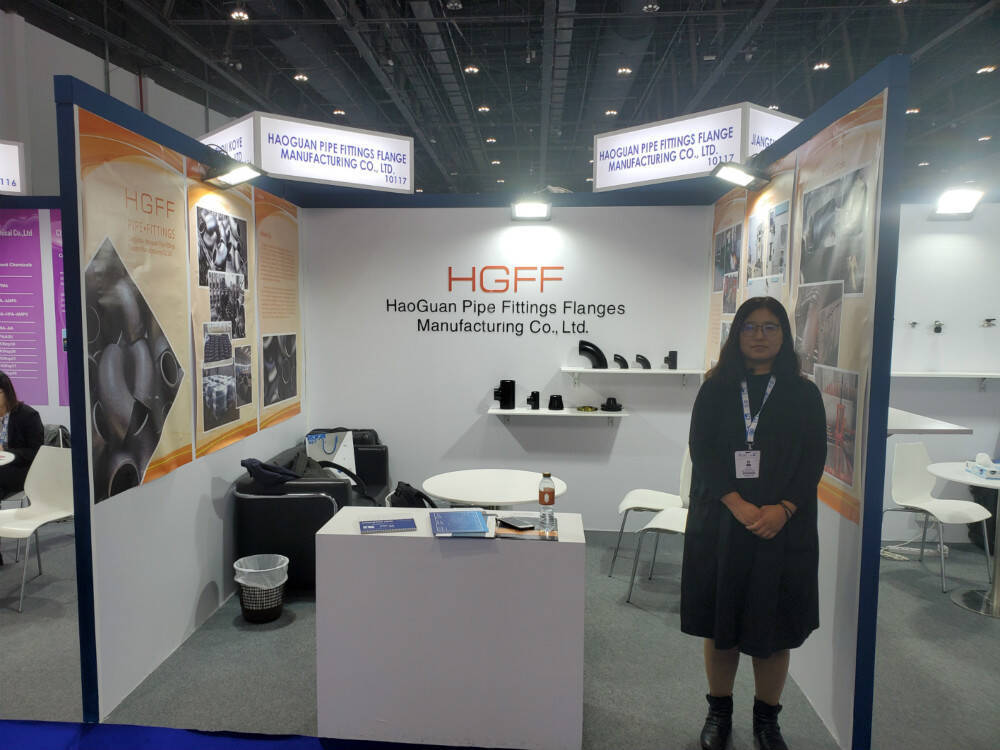
November 11Th-14Th ADIPEC Dubai Exhibiton